Marketers love using emails and texts to be in contact with customers. It's so cheap and easy to get messages out that some abuse the channels and send out daily messages. Even worse, some send out multiple messages a day, which just crowd a customers' inbox and make them start tuning out those messages.
One of the biggest offenders on this front is the Gap family of brands. As the umbrella organization comprises not just Gap but also Banana Republic, as well as the "Factory" versions of both those brands, on top of Old Navy and Althea, it sends me a minimum of three and sometimes even five emails each and every day. So, yes, I tune most of them out now.
But the one pictured above caught my eye. Can you guess why?
Are you motivated to make a purchase because a brand lets you know that you have free money to spend that amounts to just $0 in rewards? In other words, your purchasing power is unchanged from what you thought it was before.
It's all too obvious that Old Navy is attempting to personalize the offer not just by using my name but by trying to tempt me to make a purchase that will be discounted by my rewards. As the algorithm is not programmed to discard that message for customers without a reward balance, we get a message that shows not all personalization necessarily fits your marketing message.
A bit later I got this email that made a similar mistake in a PR pitch. Notice how the personalization is worked in without regard for understanding how we address people in real life:
"Setting up your business remotely during Great Resignation
I have a story I think Brown, Ariella would want to cover about a firm that can help businesses
affected by “The Great Resignation,” which is continuing with 4.3 million resignations in
December 2021 alone (1).
One other nitpick I have is that it refers to the Great Resignation continuing by citing the numbers from December 2021. As we are in March now, that is a non sequitur. Instead of presenting the sentence in this order the text should have started with the December stat and then say that the trend continues in 2022, possibly with its own sentence set up this way: In December 2021 alone 4.3 million resigned from their jobs, and "The Great Resignation" trend is continuing in 2022, raising concerns for businesses that want to retain their employees.
1. Offer value What you present has to always center around your customer concerns rather than your own latest
offering or uniqueness, so no shameless self-promotion and no clickbait.
2. Offer relevance
While you can and should jump on seasonal and news trends, the core of your content should always
be relevant to your target audience beyond the current news. That will help your SEO.
3. Compose concise titles Write headlines that are on target, to the point, and short enough to be read on a phone (no more than 65 characters). 4. Offer curb appeal
Even if you’re using words as your primary medium rather than video or photos, remember to pay
attention to visual appeal with an attractive layout and images that not only catch the eye but fit the story you tell.
One caveat on this: be sure that your graphics load quickly. If they take several seconds to load, people will just leave the page without waiting for them to populate, and your SEO will suffer, too.
5. Engage with your audience
Use your social media channels as another avenue of content marketing, not just to link to your blogs
and videos but to engage directly with your audience there with discussions and shares that are not just broadcasts of what your brand is doing.
6. Use analytics
Check your stats every month or so to see what’s performing well and what isn’t to inform and optimize
future content.
7. Be reliably consistent
Plan to put out content continuously and consistently to build your authority and keep your audience coming
back rather than treating your video or blog as a one-and-done.
Quality, consistency, relevance, and engagement go a long way in connecting with people. Over time that translates into improved brand recognition and goodwill that also increases customer loyalty.
Do you think this level of content is beyond your budget? Think again. Poor quality content not only fails to deliver the ROI you get from high quality content; it can actually harm your brand by demoting the the site ranking you've invested so much in building up.
What you really can't afford is poor quality content. Hire a seasoned pro to craft the right message for your organization and your demographics. Learn more here and book a free consultation call.
When we think of Valentine’s Day, B2B is not exactly what we think of when we picture candlelit dinners, bouquets of roses, chocolates, gifts of jewelry. and stuffed animals and cards festooned with red and pink hearts. However, if you think out of the heart-shaped box, you can begin to understand that there are quite a number of parallels.
First of all there is the recognition of important relationships. Sure Valentine’s Day is associated with romantic one specifically, though data tells us that for many people it is also a day to celebrate their love for parents, children, friends, coworkers, classmates, teachers, and even pets.
This doesn’t mean that you should be shoehorning your own B2B messaging into a heart shape when it doesn’t fit. Instead, think about how you can advance that relationship in authentic ways that relate to your client’s concerns. That means you demonstrate your commitment to meeting their expectations for your products and services.
It’s the thought that counts for a gift, right? So is it enough to show you realize you are expected to buy something by picking up a gift conveniently set out on display at the drugstore on your way home? No, the thought that counts is the one that shows you know what the person is about and what they’d like to get. The question is: what expectations are in place and are they met?
One interesting revelation from the National Retail Foundation (NRF) data on holiday spending is the discrepancy that often occurs between the type of gift that people say they want and the percentage that say that is the type they intend to give. To apply this to a B2B context, you don’t want to disappoint your customers by failing to meet their expectations.
So the first step, obviously, is getting to know them well enough to be able to grasp what they need, what their business goals and pain points are so that you can anticipate them in delivering the solutions. In other words, if you want to show you really care, you have to do better than just the token nod of a one-size-fits-all bouquet of red roses.
What does it take to deliver on your B2B customer expectations? You have to listen to what they’re saying about their current needs and wants. That’s not limited to what they tell you directly if you ask them for information in surveys; a lot of it is already out there. It’s possible to tap into the wealth of data, including the record of their purchases, how they place those purchases, what promotions they respond to, where they’re businesses are and where they wish to get to.
All those data points feed into a complete view of the business that allows you to show you understand them. On that basis, you can build customized communication that is delivered the way they prefer it, whether that is via text, email, snail mail, a video chat, or an in-person visit. While one client may love the in-person attention, another may consider it a drain on precious time at the office.
The takeaway from Valentine’s Day for building up a happily ever after relationship in B2B is the following:
1.Avoid the one-size-fits-all messages that will disappoint a large number of clients.
2. Put in the effort to get to know what they really want from you.
3. Deliver on those expectations and plan for how to anticipate their future needs and wants.
4. Repeat as necessary.
Acting on wrong assumption in pushing a one-size-fits-all attempt at communication when you should be personalizing doesn't show caring but a lack of consideration for what your recipient prefers. That can be as much a disaster as sending flowers to someone who is highly allergic to them or chocolates to a diabetic because you assumed that the popular choices are the way to go with everyone.
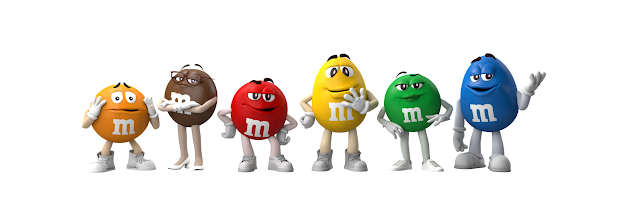
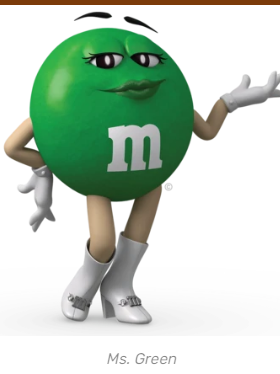
No more boots for Ms. Green and other changes for M&M's candies
A major component of marketing is tapping into trends and making an impression. When it works, these brand messages captures attention and show their relevance to customer concerns to increase feelings of loyalty.
But when the brand missteps, it embarrasses itself and risk alienating the very people it intended to court. Here are three recent examples from major brands that certainly had the budge to do adequate research before launching such campaigns.
Adidas' topless pics: branding boon or bust?
On February 9, 2022, Adidas pinned a tweet with the hashtag #SupportEverything that included 25 pictures of women's breasts to demonstrates the range of sizes, shapes, and colors (though skin tones have no bearing whatsoever on the fit and support of a bra). Here's the tweet without the photos:
The brand posted the same photo to its Instagram, though there the breasts have a bit of airbrushing to achieve the digital equivalent of pasties. The overall reaction on the Meta-owned platform was more positive than it was on Twitter, judging from the sentiments expressed in the nearly 3k quote tweets.
It's true that some considered the move liberating. For example, Jezebel applauded the tweet in Adidas Frees the Nipple.
The Barstoolsports blog response corroborates what I thought was the real game here: baring what is usually covered still gets a certain amount of shock value, and that is what the brand is exploiting in presenting the 25 pictures. While the post celebrated achieving marketing goals, the comments in response were not at all the positive if you're after celebrating diversity in women's bodies. It is the inevitability of such reactions that makes some people feel this is not a positive step for women
On its own site, Adidas doesn't show any topless women. In fact, the embedded video (also on YouTube) that explains the problem women have in finding the right fit only shows braless women from the back, where the marks left from bras attest to poor fit.
The braless pictures, on the other hand, are meant to make the very reasonable notion of making sports bras do more than serve as short tank tops into something almost transgressive. It's really not, and Adidas is certainly not the first brand to offer more bra fit choices than the standard 32A to 40D range of sizes.
My guess is the social media manager was told, "Do something to get people's attention," and the person decided this was pushing the envelope. For the "no such thing as bad publicity" school of thought, it's a success. But I believe that the brand did alienate some potential customers here, making it into a branding bust (pun intended) for a consumer brand with a very wide market base.
M&M's misses the mark when aiming for inclusivity
M&M's candies got a makeover in the name of inclusivity. But the public is not impressed. M&M’s announcement about the changes included this video:
The comments are probably not quite what they were expecting, or they would have disabled them to begin with, as I wrote here.
Mars says it’s not just about candy but a larger commitment “to create a world where society is inclusive.” The emphasis on women’s representation is what trickles down to showing the candies that have female identities wearing more sensible shows now than they have in the past.
For example, Ms. Brown’s high heels have been replaced by sensible pumps. Ms. Green’s heeled boots are replaced by comfortable sneakers.
I’m all for comfortable footwear myself and gave up on high heels long ago, though I have to say, I don’t really believe that cartoon renderings designed to sell candies will have a direct impact on female choices. The representations of different types of people could add to the fun consuming candies but they really don’t direct people’s life decisions.
Indeed, that kind of critique was raised even by those who are very much in favor of changing thing. The fact remains that fictionalized progress is no substitute for real progress. Then there's the other camp that is tired of brands' claims they’re saving the world through their products and marketing.
Despite marketers insisting that people want to see their values reflected in brand messaging, claiming too much for a brand makeover can backfire. It’s clear that audiences are not nearly as impressed with the brand message as the brand is with itself, and that’s now a win.
Coke missteps when hopping on the gaming bandwagon
Massively multiplayer online (MMO) are designed to be extremely engaging with life-like characters and details to make up an immersive environment. As I wrote here, they often center around epic battles between species that may be using highly advanced or medieval style weapons.
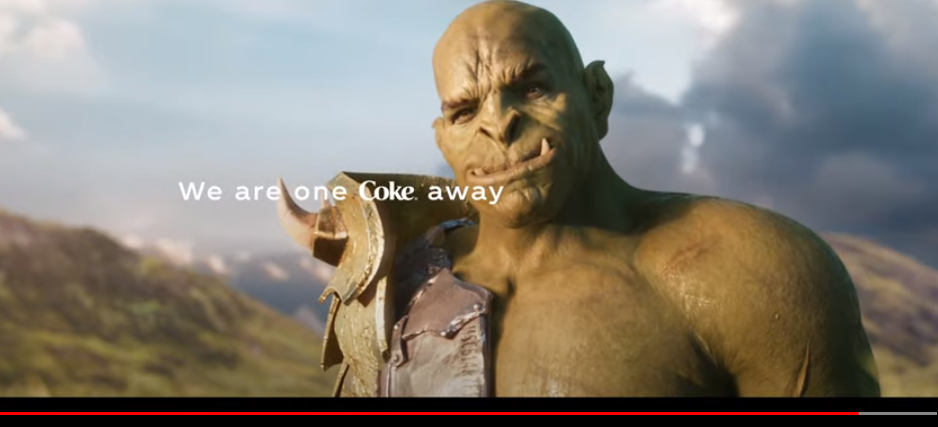
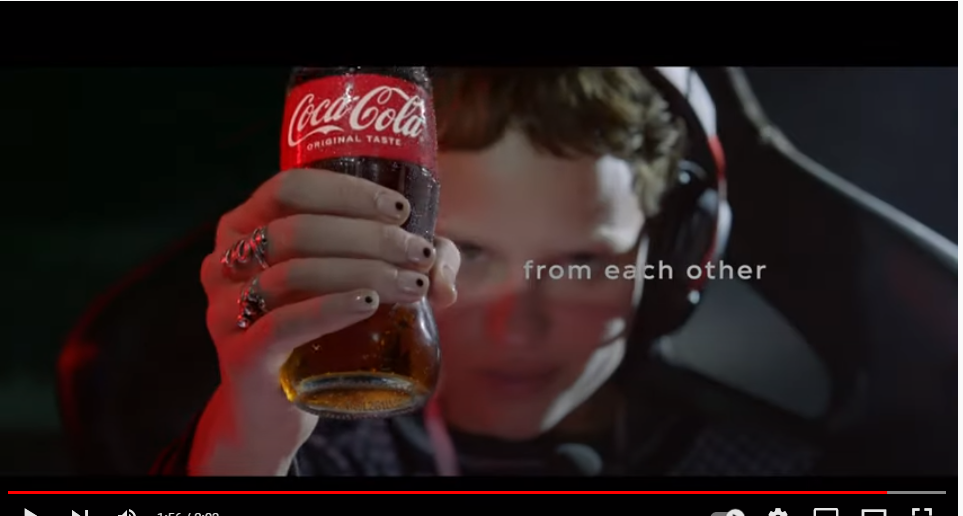
Coca-Cola brand decided to hope on this hot trend, using an MMO as the backdrop for the commercial it released on September 30, 2021:
Spoiler alert: drinking Coke doesn’t just revive the player; it gives the ross between an Orc and the Hulk character in the game enlightenment. He literally throws down his weapon and grasps the hand of his enemy is a show of solidarity that brings the whole world to the verge of shocked recognition.
Everyone embraces peace and love to fit wit the tagline of “We are one Coke Away from each other.”
Coke
One of the comments on the video is from Kevin Sugrue who explains what the brand gets wrong::
“Lacks insight and understanding of esport gamers. This tries to approriate [sic!] the gaming trend in Coke's pursuit of regaining relevance among a younger audience. You compete in MMO games to help your team triumph over the competition; not to unite the entire world.”
Here Coke tried to plaster its “I’d like to buy the world a Coke and teach it harmony” jingle on a specific form of gamification culture that may just resent the intrusion. Those who are deeply involved in that culture consider it an epic fail for the brand.






 Posts
Posts

